Back to subject area

BA Primary Education (3-11) with recommendation for QTS

Undergraduate

Start date
Study mode
Course length
UCAS Code
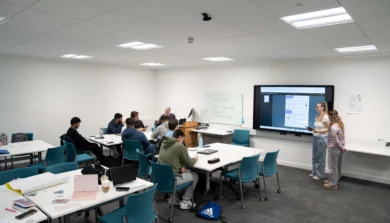
Education, Childhood and Professional Studies students in lecture room working

BA Primary Education (3-11) with recommendation for QTS

Discover how professional development supports inclusive practice and classroom confidence. The BA (Hons) Primary Education 3–11 with Recommendation for QTS at Birmingham Newman University offers an inspiring and values-led route into the teaching profession. If you are passionate about supporting children’s development and helping every learner flourish, this course provides both the academic grounding and practical experience you need. You will explore how children learn across the primary age range, while developing essential skills in lesson planning, classroom management and inclusive teaching. From your first day, you will be part of a university community that empowers you to grow, reflect and lead with integrity.

What does this course cover?
What does this course cover

You will study across the full primary curriculum, including core subjects such as English, Mathematics and Science, as well as foundation subjects. Key areas such as child development, safeguarding and professional standards are central to your learning. You will also explore SEND, the Early Years Framework and strategies for teaching diverse learners with confidence and care.

Learning extends beyond lectures. You’ll gain insight through school placements, immersive practice weeks and interactive workshops led by experienced educators. Personalised mentoring and academic guidance are embedded throughout, helping you to build your professional identity and teaching voice.

How will I be assessed?

Assessment on this course is designed to reflect the practical and professional demands of teaching, while supporting your development as an inclusive and adaptable educator. There are no exams on this programme. Instead, you will be assessed through a variety of methods, including written assignments, lesson planning tasks, presentations, portfolios and school-based observations. These approaches allow you to demonstrate your understanding, apply your learning in real-world contexts and receive constructive feedback to help you grow. The focus is on developing your confidence, critical thinking and professional judgement, ensuring you are well prepared to meet the Teachers’ Standards and succeed in your teaching career.

Why study this course?

This course is ideal for individuals who are passionate about making a difference in children’s lives and want to pursue a meaningful and rewarding career in education. Whether you are just beginning your journey into teaching or returning to study with experience, the BA (Hons) Primary Education 3–11 with Recommendation for QTS offers a values-led and professionally grounded route into the classroom. It combines academic depth with practical experience, enabling you to develop the knowledge, skills and confidence needed to support all learners. With a strong emphasis on inclusive practice, reflective teaching and real-world relevance, the course prepares you to thrive in a variety of educational settings and contribute positively to school communities.

‘Undertaking this programme will not only train you to become a competent and confident primary school teacher, but it will also train you to become a Birmingham Newman teacher. A Birmingham Newman teacher has the child at the centre of everything they say and do. The programme will equip you with a deep understanding of how children develop and learn as well as providing you with a range of current and research-led pedagogy to use to provide the best possible education for the children you teach in your rewarding career in teaching.’ Steve Patrick B.Ed (Hons) M.Ed PGCHE FHEA), Undergraduate – Primary ITE Programme Lead

Explore the Foundations of Effective Teaching

Throughout the course, you will study the full primary curriculum, including English, Mathematics, Science and foundation subjects, alongside essential areas such as child development, safeguarding and professional standards. You will also engage with key educational frameworks, including the National Curriculum, the Early Years Foundation Stage and SEND guidance, developing strategies to support diverse learners with care and confidence.

In the second year of the undergraduate programme, trainees undertake a placement within Special Educational Needs and Disabilities (SEND) or alternative provision. This experience broadens their understanding of inclusive practice and supports the development of skills for meeting diverse learner needs. It also provides valuable insight into specialist education pathways, helping trainees to explore potential future roles within SEND and alternative education contexts.

Practical experience is woven into your learning through school placements, ITAP weeks and interactive workshops that mirror the realities of classroom life. These opportunities help you to build your teaching toolkit, develop your professional identity and prepare for a wide range of roles in education.

Supportive and Personalised Learning

At Birmingham Newman University, you will be part of a close-knit and inclusive academic community that places your personal and professional development at the heart of everything we do. The course is delivered by experienced educators who are committed to supporting your growth as a reflective and confident practitioner. With small group teaching, regular feedback and one-to-one mentoring, you will be encouraged to explore your strengths, overcome challenges and find your teaching voice. This supportive environment empowers you to take ownership of your learning and progress with clarity and purpose, whether you choose to work in mainstream, SEND or faith-based settings, or pursue further study or leadership roles.
Got a question you’d like to ask?

Entry requirements

112 UCAS Points

Specific GCSE requirements:

• GCSE/IGCSE English language and maths grades 9-4/A*-C or equivalent
• GCSE/IGCSE science grade 9-4/A*-C or equivalent*

If English is not your first language, you must have an IELTS score of 6.5, with no element below 6.0. (Other English language qualifications are also accepted. Please contact admissions for further information).

Non-Academic Requirements:

Success at Interview. The Admissions team will use the course entry requirements, as well as your personal statement, and reference to shortlist and invite successful candidates for interview. Candidates will be assessed at interview on their motivation and understanding of the role of a teacher.

DBS Clearance. Candidates must receive a satisfactory Disclosure and Barring System check prior to commencing the course.

Course fees

The tuition fee for academic year 2026/27 is: £9,790. Tuition fees for courses starting April to May 2026, fall within the 2025/26 academic cycle.

Additional costs

Check out our blog/news/events

Benedict Chigara - Law Society 2026 Awards

Birmingham Law Society Celebrates Excellence at 24th Annual Legal Awards 2026

The 24th anniversary of the Birmingham Law Society Legal Awards was marked on 12 February 2026…
Exterior of Birmingham Newman with globe

Celebrating a Key Publication Supporting Entry-Level Students at Birmingham Newman University

Birmingham Newman University continues to reflect proudly on the publication of Essential Skills for Entry…
Birmingham Newman Celebrates Green Week 2026 with Campus‑Wide Events

Birmingham Newman will host its annual Green Week from 23 to 27 February 2026, bringing…

Mark Holland - GEM Awards

Research that makes a difference: Mark Holland wins Most Impactful Project Award

In December, we held our Staff Awards, where we recognised the outstanding achievements of colleagues…

Student with hula hoop and young children

Sports Coaching students Deliver Coaching Sessions for Local Primary Pupils

Birmingham Newman University recently welcomed pupils from St Peter’s Primary School to campus as part…

Book an open day

Find out about our next open day. Book now to secure your place.

Creative Practice Across the Curriculum
20 Credits (Compulsory)

This module will build upon previous knowledge of the foundation subjects as part of the primary National Curriculum. It will provide the opportunity for you to widen your understanding of theory and practice in relation to creative teaching in the foundation subjects through considering the dynamic relationship between teacher identity, emerging pedagogical practice and a school’s ethos. You will be guided to explore the ways in which creative practice can transform pupils’ knowledge, capabilities, and beliefs about learning. Furthermore, the module will allow you to consider the role of adaptive teaching in the foundation subjects as a way of increasing pupil success.

Managing the Classroom 3-7
20 Credits

The aims for this module are set in the context of the QAA Framework for Higher Education Qualifications and the ITT Core Content Framework (2019). University-based training is provided through the full range of modules undertaken at level 5: these develop the theoretical, subject and pedagogical knowledge needed to underpin effective classroom practice. This module provides the opportunity to identify and apply these in practice during school-based training with the preferred primary age range in a placement setting. Successful completion of all elements of the module are required to progress on to the level 6 professional practice module, Meeting the Professional Standards. In this work-related module, the focus for school-based training is on Managing the Classroom. During an 8-week placement block, students undertake work-related learning in a school setting to experience the wider life of the school and undertake professional tasks and activities that contribute to children’s learning. Students will be expected to reflect upon and critically evaluate their developing knowledge, understanding and skills as they begin to take increasing responsibility for teaching pupils and fulfilling the duties expected of a teacher. They will be required to devise action plans and set targets for continued development and reflect on their own professional development in collaboration with a School Based Tutor from the setting, supported by a Partnership Tutor from the university. Evidence of an appropriate professional standard is necessary for recommendation for Qualified Teacher Status (QTS).

Managing the Classroom 5-11
20 Credits

The aims for this module are set in the context of the QAA Framework for Higher Education Qualifications and the ITT Core Content Framework (2019). University-based training is provided through the full range of modules undertaken at level 5: these develop the theoretical, subject and pedagogical knowledge needed to underpin effective classroom practice. This module provides the opportunity to identify and apply these in practice during school-based training with the preferred age range in a placement setting. Successful completion of all elements of the module are required to progress on to the level 6 professional practice module, Meeting the Professional Standards. In this work-related module, the focus for school-based training is on Managing the Classroom. During an 8-week placement block, students undertake work-related learning in a school setting to experience the wider life of the school and undertake professional tasks and activities that contribute to children’s learning. Students will be expected to reflect upon and critically evaluate their developing knowledge, understanding and skills as they begin to take increasing responsibility for teaching pupils and fulfilling the duties expected of a teacher. They will be required to devise action plans and set targets for continued development and reflect on their own professional development in collaboration with a School Based Tutor from the setting, supported by a Partnership Tutor from the university. Evidence of an appropriate professional standard is necessary for recommendation for Qualified Teacher Status (QTS).

Effective Teaching and Assessment in Key Stage 1 and 2
20 Credits

In this module you will be provided with opportunities to extend your knowledge and understanding of statutory and non-statutory guidance in relation to the teaching of the English, Mathematics and Science across Key Stage 1 and 2. The three core subjects will be used as a vehicle to explore effective principles and methods of teaching and learning within the primary classroom. You will enhance your understanding of the principles and practices of effective lesson planning across the three subjects and develop your ability to adapt and improve existing lesson plans to provide more enriching learning opportunities for children. You will develop knowledge and understanding of assessment for learning, record keeping, monitoring, tracking, progression, SATS, league tables, using assessment and progression data and analysis and issues and the principles and practices of assessment. The main focus will be upon Key Stage 1 and 2 although links will be made to the early years foundation stage as appropriate.

Data Analysis Within Educational Research
20 Credits (Compulsory)

This module is designed to develop students’ critical knowledge and understanding of the underlying concepts, principles, methods and data analysis techniques in educational research. Students will be guided through both quantitative and qualitative methods for enquiry, in which they will be encouraged to critically evaluate their appropriateness. Engaging in data analysis techniques, students will have the opportunity to interpret research findings and contextualise them within pertinent educational issues. Research ethics and rigour will be evaluated; and students will be encouraged to reflect upon the links between teacher as researcher, pupil outcomes and their own professional development.

Adaptive Practice: Send Framework and Specialist Support
20 Credits (Compulsory)

This module offers students the opportunity to enhance their professional development through exploration of the concepts of inclusion and special educational needs and to gain an appreciation of the complexity of presenting problems. Students will engage with research in the area of inclusion and with the debate surrounding the effectiveness of the inclusion agenda. This will include an in-depth consideration of the issue of pupil disaffection using current research and relevant literature. There will be an informed perspective on current debates in the field of Special Educational Needs and this will provide opportunities for students to engage with their own interests in this area. Additionally, students will consider the range of provision for all children including those with Special Educational Needs and Disabilities and will understand the processes for the diagnosis of, assessment for, and provision provided by multi agencies for pupils with a range of Special Educational Needs. This module aims to develop studentsÊ awareness and understanding of how to develop opportunities for learning and teaching in the classroom where language, particularly multilingualism, could be seen as a barrier but in actual fact can enrich classroom culture. There will be a continued focus on students’ personal development as readers, writers and speakers of languages within different contexts. Students will normally spend time in a SEND setting as part of this module.

Managing the Classroom 7-11
20 Credits

The aims for this module are set in the context of the QAA Framework for Higher Education Qualifications and the ITT Core Content Framework (2019). University-based training is provided through the full range of modules undertaken at level 5: these develop the theoretical, subject and pedagogical knowledge needed to underpin effective classroom practice. This module provides the opportunity to identify and apply these in practice during school-based training with the preferred primary age range in a placement setting. Successful completion of all elements of the module are required to progress on to the level 6 professional practice module, Meeting the Professional Standards. In this work-related module, the focus for school-based training is on Managing the Classroom. During an 8-week placement block, students undertake work-related learning in a school setting to experience the wider life of the school and undertake professional tasks and activities that contribute to children’s learning. Students will be expected to reflect upon and critically evaluate their developing knowledge, understanding and skills as they begin to take increasing responsibility for teaching pupils and fulfilling the duties expected of a teacher. They will be required to devise action plans and set targets for continued development and reflect on their own professional development in collaboration with a School Based Tutor from the setting, supported by a Partnership Tutor from the university. Evidence of an appropriate professional standard is necessary for recommendation for Qualified Teacher Status (QTS).

Beyond the Curriculum: Religious and Social Education
20 Credits (Compulsory)

This module will examine the role of Religious Education and other curriculum subjects in developing children’s understanding of their wider social environment as part of their preparation to live in society. Through the lens of SMSC (Spiritual, Moral, Social, Cultural) students will be prepared for a better understanding of the expectations from Ofsted to this overarching theme for all curriculum subjects. RE will provide an opportunity to examine world views alongside religious and non-religious perspectives on the nature of spirituality. This will be extended to demonstrate how different subjects within the curriculum make a significant contribution to the development of the whole child through SMSC. Students will examine theoretical frameworks for spiritual, moral, social, and cultural development. The course will also address wider issues including teacher confidence, assessment, and implementation of SMSC across the curriculum. By the end of the module students will have improved their understanding of the holistic development of children, both through and beyond the curriculum. The students will know and understand the significance that Ofsted has placed upon SMSC in deciding the overall effectiveness of a school in the delivery of education.

Effective Teaching and Assessment in the Early Years and Key Stage 1
20 Credits

In this module you will be provided with opportunities to extend your knowledge and understanding of statutory and non-statutory guidance in relation to the teaching of the Early Years Foundation Stage and Key Stage 1, including exploring effective practice in terms of transition. You will enhance your understanding of the principles and practices of effective lesson planning across Early Years and English, maths and science ion KS1 and develop your ability to adapt and improve existing lesson plans to provide more enriching learning opportunities for children. Consequently, wider aspects of pedagogy, such as models for outdoor learning, will be used as a vehicle to explore effective principles and methods of teaching and learning. You will develop knowledge and understanding of the principles and practices of assessment, planning for assessment for learning, record keeping, monitoring and becoming familiar with tracking tools that document attainment and progress. Current statutory legislation in terms of testing, such as SATs, phonics screening and league tables will be used to further understanding of the purposes and processes of data analysis. The main focus will be upon Early Years and Key Stage 1, although reference will be made will be made to Key Stage 2 as appropriate.

Placement information

Placements are a central part of your development on this course, giving you the opportunity to apply your learning in real classroom settings across the full primary age range, including 3 to 7, 5 to 11 and 7 to 11. Each year, you will undertake school placements that are carefully structured to build your confidence and competence over time. You will be supported throughout by experienced school-based mentors and university tutors who offer personalised feedback and guidance. In addition to placements, undergraduate trainees take part in six Intensive Training and Practice (ITAP) weeks across the three years of study, with two ITAPs per year. These focus on key areas such as behaviour management, assessment for learning, SEND inclusion and phonics and early reading. These experiences are designed to deepen your understanding of effective teaching and prepare you for the realities of the profession.

Studying and living in Birmingham

At Birmingham Newman University, you’ll enjoy the best of both worlds: a peaceful, green campus that creates the ideal setting for focused study and personal reflection, yet remains just eight miles from the vibrant city centre.

As the UK’s second-largest city, Birmingham is also one of the youngest and most diverse in Europe, offering a dynamic blend of culture, innovation and opportunity. From world-renowned museums and music venues to a thriving food scene alongside a growing business and tech sector, it’s a place where creativity and ambition naturally thrive.

Experience Birmingham: A City Full of Possibilities

Whether you're discovering the Midlands for the first time or already know the area well, Birmingham provides a lively and inclusive environment for students. As one of the most energetic and multicultural cities in the UK, it’s a place where you can grow academically while developing personally. Its rich cultural heritage, creative energy and broad range of opportunities make it an inspiring backdrop for your university journey.

A City That Loves Great Food

Birmingham is a brilliant place to explore diverse culinary experiences. You might wander through the famous Balti Triangle, sample global street food at Digbeth Dining Club or enjoy a relaxed meal by the canals in Brindleyplace. The city is also home to independent cafés, vegan-friendly eateries and countless hidden gems. Whether you're grabbing a quick bite between lectures or planning an evening out, there’s always something new to discover.

Arts, Culture and Entertainment

The city pulses with creativity. You could catch live music at the O2 Academy, experience a world-class performance at the Birmingham Hippodrome or browse exhibitions at the Birmingham Museum and Art Gallery. Creative spaces like the Custard Factory showcase local talent while hosting events that celebrate innovation. With festivals, sporting fixtures and cultural celebrations taking place year-round, there’s never a shortage of things to enjoy.

Simple & Convenient Travel

Getting around Birmingham is straightforward thanks to its well-connected public transport system. Buses, trams and trains make it easy to reach campus, explore the city or travel further afield. Whether you're commuting daily or heading off for a weekend adventure, transport is both accessible and affordable.

Life Beyond the Lecture Hall

Your time at Birmingham Newman University extends far beyond academic study. You’ll have the chance to join student societies, contribute to community projects or try something entirely new. The university’s supportive atmosphere encourages you to build confidence, develop practical skills and feel genuinely at home throughout your studies.

What careers can I consider

Upon successful completion, you will be awarded Qualified Teacher Status (QTS), confirmed by the Department for Education. Newman graduates are highly regarded across the UK for their creativity, commitment and sense of purpose. Whether you choose to teach in mainstream, SEND or faith-based settings, or pursue leadership or further study, you will be equipped to make a meaningful difference in children’s lives. You’ll also join a dynamic network of educators who continue to support and inspire one another well beyond graduation.

Accreditations and exemptions

Upon successful completion of the course and demonstration of the Teachers’ Standards, you will be awarded Qualified Teacher Status (QTS), confirmed by the Department for Education. Birmingham Newman University is recognised by Ofsted as a GOOD provider of Initial Teacher Education (2024), reflecting the quality of its academic teaching and placement support. While the course does not offer exemptions from other professional bodies, it provides a strong foundation for continued professional development, including progression to postgraduate qualifications such as the MA Education. It also opens pathways into leadership roles and specialist areas within the education sector.

Courses we think you'll also like

Instagram does not support direct link sharing, below is the page URL to copy to add to Instagram posts manually: