
Forensic Psychology (with Foundation Year) BSc (Hons)
Undergraduate
- Start date
- –
- Study mode
- –
- Course length
- –
- UCAS Code
- –

Interested in a different start date?
This course has been replaced with a new course, Psychology with Forensic and Criminal Perspectives (with Foundation Year).
Discover how psychology can help us understand crime, support rehabilitation and contribute to a more just society. The BSc (Hons) Forensic Psychology at Birmingham Newman University offers an intellectually engaging route into the study of psychology within criminal and legal contexts.
You will explore the psychological foundations of criminal behaviour and examine how theory informs justice, intervention and social change.
Why study this course
Studying Forensic Psychology at Birmingham Newman University gives you the opportunity to explore the complex relationship between psychology, crime and justice in a supportive and engaging environment. You will build a strong foundation in core psychological principles while developing the skills to apply them in real-world settings. Guided by experienced tutors, you will be encouraged to think critically, ask questions and reflect on how psychology can make a meaningful difference in society. The course is designed to support both personal growth and professional development.
Explore the Psychology of Crime
Forensic Psychology is rooted in understanding behaviour, evaluating risk and promoting rehabilitation, and this course helps you apply these principles in practice. You will study topics such as criminal behaviour, risk assessment, intervention and the role of psychology in justice systems. Each year builds on the last, offering increasing opportunities to apply theory to real-life scenarios and develop your own areas of interest. In your final year, you will complete an independent research project, supported by expert supervision, allowing you to explore a topic of personal or professional relevance.
Supportive and Personalised Learning
At Birmingham Newman, you will be part of a welcoming and inclusive learning community that values collaboration, integrity and professional growth. Teaching is delivered through small-group seminars, one-to-one academic support and applied learning activities. You will be taught by psychologists with expertise in forensic and broader psychological fields, and benefit from a curriculum informed by current research and practice. The course is designed to help you grow in confidence, develop your professional identity and prepare for a wide range of careers.
Got a question you’d like to ask?
Entry requirements
We welcome students from all backgrounds and accept a wide range of qualifications. If yours aren’t listed, don’t worry – our Admissions Team can help you explore your options. See full entry requirements.
Entry requirements, for UK home students: 48 UCAS points
Those with significant work and life experience of a complexity that demonstrates an aptitude to study at degree level, but with no formal qualifications, will also be favourably considered.
Different degree pathway options available at the end of the foundation year may have different additional entry requirements.
If you require any further information or clarification of entry requirements please contact our friendly, helpful Admissions department, who will be happy to help.
Please contact Admissions if you have any questions.
Course fees
The tuition fee for academic year 2026/27 is: £9,790. Tuition fees for courses starting April to May 2026, fall within the 2025/26 academic cycle.
Fees for the 2025/26 academic year can be found on our Student Finance pages.
Additional costs
The University will review tuition fees and increase fees in line with any inflationary uplift as determined by the UK Government, if permitted by law or government policy, in subsequent years of your course. It is anticipated that such increases would be linked to RPI (the Retail Price Index excluding mortgage interest payments).
Check out our blog/news/events
Celebrating a Key Publication Supporting Entry-Level Students at Birmingham Newman University
Birmingham Newman University continues to reflect proudly on the publication of Essential Skills for Entry…
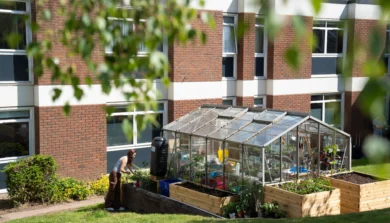
Birmingham Newman Celebrates Green Week 2026 with Campus‑Wide Events
Birmingham Newman will host its annual Green Week from 23 to 27 February 2026, bringing…

Research that makes a difference: Mark Holland wins Most Impactful Project Award
In December, we held our Staff Awards, where we recognised the outstanding achievements of colleagues…

Sports Coaching students Deliver Coaching Sessions for Local Primary Pupils
Birmingham Newman University recently welcomed pupils from St Peter’s Primary School to campus as part…

Vice-Chancellor Professor Jackie Dunne awarded MBE in New Year Honours
Vice-Chancellor of Birmingham Newman University receives an MBE for services to Higher Education.
Book an open day
Find out about our next open day. Book now to secure your place.
Placement information
Our Careers team provides tailored advice, placements and workshops to help you build confidence and prepare for life after university.

What careers can I consider
Graduates of this course are prepared for a wide range of careers in the criminal justice system, mental health services, youth work and related fields. You will develop skills in critical thinking, ethical judgement and psychological analysis, all of which are valued across professional settings. The course also provides a strong foundation for postgraduate study or professional training in areas such as forensic, clinical or counselling psychology. With a degree in Forensic Psychology from Birmingham Newman University, you will be ready to contribute to safer and more inclusive communities.
Courses we think you'll also like

Psychology with Forensic and Criminal Perspectives (with Foundation Year) BSc (Hons)
- Start date:
- September 2026

Psychology with Criminology (with Foundation Year) BSc (Hons)

Psychology and Counselling Studies (with Foundation Year) BSc (Hons)
- Start date:
- September 2026

Psychology and Childhood Studies (with Foundation Year) BSc (Hons)
- Start date:
- September 2026