
Student welcome in the quad

Key dates

Teaching starts

Induction days

  • Wednesday 16 September (9am)

More Induction & Timetable information below

Programme Lead

Induction

Pre-induction

Before teaching begins, students are encouraged to start thinking about what effective coaching looks like in practice.

There is no expectation that students arrive with extensive coaching experience; however, it would be useful for them to observe a coaching session, training session, or PE lesson in their local setting and reflect on how the coach communicates, organises activities, gives feedback, and adapts practice for different participants.

Students may also wish to watch introductory coaching or coach education videos from recognised sport organisations, such as UK Coaching or national governing bodies, to gain an initial understanding of coaching behaviours, session planning, safeguarding, inclusion, and participant-centred practice.

Prior to the start of teaching, students should also consider their own experiences of being coached and identify examples of coaching that they found effective or ineffective. These reflections will help prepare students for first-semester activities, including peer-to-peer coaching, small-group practical work, and discussions linking coaching theory with applied practice.

Induction days

Tuesday 15 September

  • 10:00 – 14:30
  • Room ED007

IMPORTANT: Please bring your photo ID with you on this date to complete enrolment.

Wednesday 16 September

  • 09:00 – 12:00
  • Room ED007

Friday 18 September

  • 09:00 – 12:00
  • Room ED007 (for outdoor activities)

During induction week, students on the Sports Coaching Science programme can expect a structured introduction to university life, the programme team, and the key procedures that will support their transition into higher education. This will include guidance on how to access and understand timetables, locate teaching rooms and specialist facilities, use the virtual learning environment, engage with university email, and follow attendance, assessment, academic integrity, safeguarding, and student support procedures.

Students will also be introduced to key academic and professional services, including library support, wellbeing, careers, disability support, and academic skills provision. Programme-specific sessions will provide an overview of the course structure, first-semester modules, expectations for practical and classroom-based learning, assessment approaches, placement or community engagement opportunities, and the role of staff within the programme.

Induction will also give students opportunities to meet their tutors and peers, tour relevant sport and teaching facilities, ask questions, and begin to understand the wider university community, including societies, sport, volunteering, and enrichment opportunities.

Timetable

Timetable

Semester 1 starts week beginning 21 September

Module introductory lecture on Monday 21 September, 12.00-13.00

  • Mondays 14.00-17.00
  • Tuesdays 9.00-11.00
  • Wednesdays 9.00-12.00
  • Thursdays 13.00-14.00 and 15.00-16.00

Full details of your individual academic timetable, including Semester 2 timetable which may differ, will be available via your university email calendar after you have completed the pre-arrival task online and set up your student login.

Module delivery

In the first semester, students on the Sports Coaching programme can expect to be introduced to the key principles of effective coaching, with a focus on developing practical coaching competencies that are underpinned by relevant theory and current best practice.

Teaching will combine classroom-based learning with applied practical sessions, giving students opportunities to explore coaching concepts, reflect on their own practice, and begin developing confidence in coaching others.

A strong feature of the first year is peer-to-peer coaching, where students work in small groups to plan, deliver, observe, and evaluate coaching activities. This approach allows students to build practical experience in a supportive environment while also developing communication, organisation, reflection, and problem-solving skills.

As the programme progresses, students will also have opportunities to engage with community groups, such as local primary schools, where they can begin to consider age-related coaching, curriculum needs, and inclusive practice.

Assessment on the programme is designed to reflect real coaching and coach education practice, rather than relying on exams. Students can expect applied tasks such as creating coach education resources, linking practical work to academic theory, and exploring coaching structures and curriculum design.

Overall, the teaching approach is interactive, practical, and student-centred, helping students connect theory with real-world coaching contexts and prepare for future careers in coaching, sport development, the wider sport industry, or further teaching.

Teaching team

Dr Richard Handyside – Head of Subject

Dr Richard Handyside leads Sport at Birmingham Newman University and supports students across the subject area. He has a strong background in performance analysis and applied sport, helping students connect academic learning with real-world sporting practice.

Dr Ibrahim Akubat – Programme Leader, Sport and Exercise Science

Dr Ibrahim Akubat is Programme Leader for Sport and Exercise Science. His teaching and research focus on exercise physiology, sport performance, training load, nutrition, and athlete monitoring, bringing applied scientific insight into students’ learning.

Dr Mark Holland – Senior Lecturer in Sport and Exercise Psychology

Dr Mark Holland teaches sport and exercise psychology, with interests in youth development, motivation, wellbeing, performance, and life skills through sport. He helps students understand the psychological factors that shape participation and performance.

Dr Alex Powell – Programme Leader, Sport Coaching

Dr Alex Powell leads Sport Coaching and brings expertise in coach education, rugby, mental toughness, and athlete development. His work helps students connect coaching theory with practical, evidence-informed coaching environments.

Professor Tony Myers – Professor in Quantitative Methods

Professor Tony Myers specialises in quantitative methods, applied data analysis, Bayesian modelling, and sport research. He supports students and researchers in developing confidence with data, statistics, and evidence-based decision-making.

Dr Rachel Bevins – Lecturer in Sports and Exercise Therapy

Dr Rachel Bevins teaches Sports and Exercise Therapy and brings experience from elite para-sport, including her work as an International Classifier. She helps students link clinical, rehabilitation, and performance knowledge to real-world sport and therapy settings.

Kat Whelan – Programme Leader and Senior Lecturer in Sports and Exercise Therapy

Kat Whelan leads the Sports and Exercise Therapy programme. She is a Graduate Sports Therapist, UKSCA-accredited strength and conditioning coach, and Olympic weightlifting coach, with experience across professional and elite sporting environments.

Mohammed Ali – Graduate Assistant

Mohammed Ali supports the Sport and Health team as a Graduate Assistant. He brings energy, practical experience, and student-focused support to the department, helping students feel welcomed and connected within the Newman sport community.

Student welcome in the quad
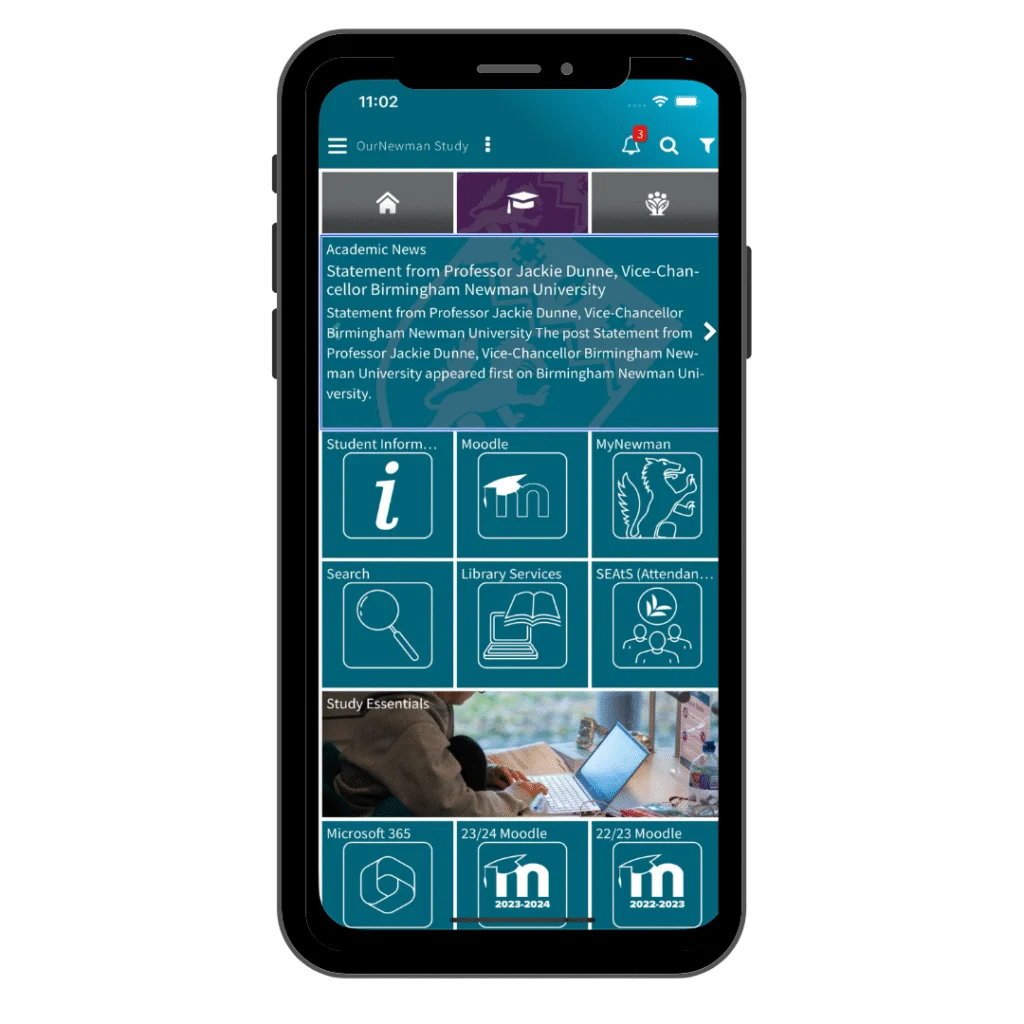
OurNewman App - student view

Disability & Inclusion overview

Privacy Notice

By clicking play, you agree to load content from YouTube, which may collect data about your visit. YouTube’s privacy policy applies.

Disabled Student Allowance

Privacy Notice

By clicking play, you agree to load content from YouTube, which may collect data about your visit. YouTube’s privacy policy applies.

Advice & Wellbeing support

Privacy Notice

By clicking play, you agree to load content from YouTube, which may collect data about your visit. YouTube’s privacy policy applies.

Mental Health Support

Privacy Notice

By clicking play, you agree to load content from YouTube, which may collect data about your visit. YouTube’s privacy policy applies.

Student Money Advice

Privacy Notice

By clicking play, you agree to load content from YouTube, which may collect data about your visit. YouTube’s privacy policy applies.

HeadStart

HeadStart schedule

Monday 7 September
On campus sessionsOnline sessions
Monday 7 September (10am to 11am)
– eLearning – Digital for your Studies
– On campus – ST002
Monday 7 September (11am – to 12pm)
– Student Engagement – How to manage your first four weeks
– On campus – ST002
Monday 7 September (1pm to 2pm)
– Learning Development – Study and Writing at University level
– On campus – HI104
Tuesday 8 September
On campus sessionsOnline sessions
Tuesday 8 September (10am to 11am)
– Digital and Your Studies (Online)
Tuesday 8 September (11am to 12pm)
– I’ve never used a library before!: What to expect in Newman Library (Online)
Wednesday 9 September
On campus sessionsOnline sessions
Wednesday 9 September (11am)
– Library – “I’ve never used a library before!”: What to expect in Newman Library
– On campus – ST002
Wednesday 9 September (12pm)
– Careers – Unlock your Future: Strengths, Options and Careers Service Intro
– On campus – ST002
Wednesday 9 September (2pm)
– Meet the Students’ Union: Your Guide to Student Life – Life Beyond the Lecture Theatre
– On campus – HI104
Thursday 10 September
On campus sessionsOnline sessions
Thursday 10 September (10am to 11am)
– AI and your learning: getting the basics right (Online)
Thursday 10 September (12pm to 1pm)
– Unlock your Future: Strengths, Options and Careers Service Intro (Online)
Thursday 10 September (1pm to 2pm)
– Learning Development: Study and Writing at University level (Online)
Thursday 10 September (2pm to 3pm)
– Sources for courses: a guide to reading expectations at University (Online)
Friday 11 September
On campus sessionsOnline sessions
Friday 11 September (10am to 11am)
– Money and Student Life (Online)
Friday 11 September (11am to 12pm)
– Managing your wellbeing (Online)
Friday 11 September (1pm)
– Student Money Advisor
– Money and Student Life
– On campus – ST002
Friday 11 September (2pm)
– Advice & Wellbeing
– Managing your wellbeing
– On campus – ST002
Friday 11 September (3pm)
– Library
– Sources for courses: a guide to reading expectations at University
– On campus – ST002

What to expect

Attendance monitoring

At Birmingham Newman University we use SEAtS Software to monitor attendance and engagement in order to support students to achieve success.

For further detailed help on using SEAtS see our SEAtS Guidance on our University Self Service Portal (student login required).

Instagram does not support direct link sharing, below is the page URL to copy to add to Instagram posts manually: