
Integrative Psychotherapy MSc
Postgraduate
- Start date
- –
- Study mode
- –
- Course length
- –
- UCAS Code
- –

Interested in a different start date?
This UPCA and UKCP-accredited programme provides the academic knowledge, clinical experience and personal development required to achieve registration as a UKCP-registered psychotherapist.
Designed to prepare students for professional practice, the course equips graduates with the skills and confidence to work as psychotherapists and counsellors across a range of public, private and voluntary sector settings. Students develop the expertise needed to work effectively and ethically with diverse adult client groups.
The MSc Integrative Psychotherapy combines rigorous academic study with a strong emphasis on reflective practice, self-awareness and personal growth. Alongside their studies, students undertake a supervised clinical placement from Year 2 onwards, completing a minimum of 450 hours of client work and gaining valuable real-world experience.
Personal and professional development is further supported through ongoing personal therapy throughout the four-year programme, with students completing a minimum of 160 hours. This integrated approach ensures graduates are well prepared to meet the complex needs of clients and to begin their careers as compassionate, reflective and skilled practitioners.
Teaching Team
Guiding you through the course is our teaching team – comprised of experienced qualified therapists who are in current clinical practice and have a range of research interests:
- Faisal Mahmood – Head of Subject (Counselling, Psychotherapy & Talking Therapies)
- Awisha Magar – Lecturer
- Bill Naylor – Senior Lecturer / Programme lead Counselling & Therapeutic Approaches
- Cara Robin – Lecturer
- Cassie Rowland – Senior Lecturer
- Emily Evans – Senior Lecturer / Programme lead Foundation Degree Integrative Counselling
- James Sedgwick – Senior Lecturer / Programme lead MSc in Integrative Psychotherapy
- Joanne Adams – Lecturer / Senior Lecturer (Placement Manager)
- Karen Lee – Senior Lecturer
- Linda Luckhurst – Senior Lecturer / Programme lead Advanced Diploma
- Oana Dinca – Lecturer
- Rebekah Woodhouse – Senior Lecturer / Programme lead JHs and Top Up
- Sandra Boden – Senior Lecturer
- Sarah Manso – Senior Lecturer / Programme lead PWP
- Stephanie Carr – Lecturer / Programme lead Intro Cert in Counselling
- Steve Roberts – Senior Lecturer / Programme lead MSc Integrative Counselling
Gain the knowledge, skills and confidence to work with a diverse range of clients, including those presenting with complex and multifaceted needs.
Benefit from a programme with a strong regional reputation and the distinction of being the only UKCP-accredited psychotherapy training in the West Midlands.
Graduate ready to enter the profession at the highest recognised level within the SCoPEd framework, providing a direct pathway to advanced professional practice in counselling and psychotherapy.
Through a combination of academic study, clinical experience and personal development, the programme equips students to become reflective, ethical and highly competent practitioners, prepared to make a meaningful difference in the lives of those they support.
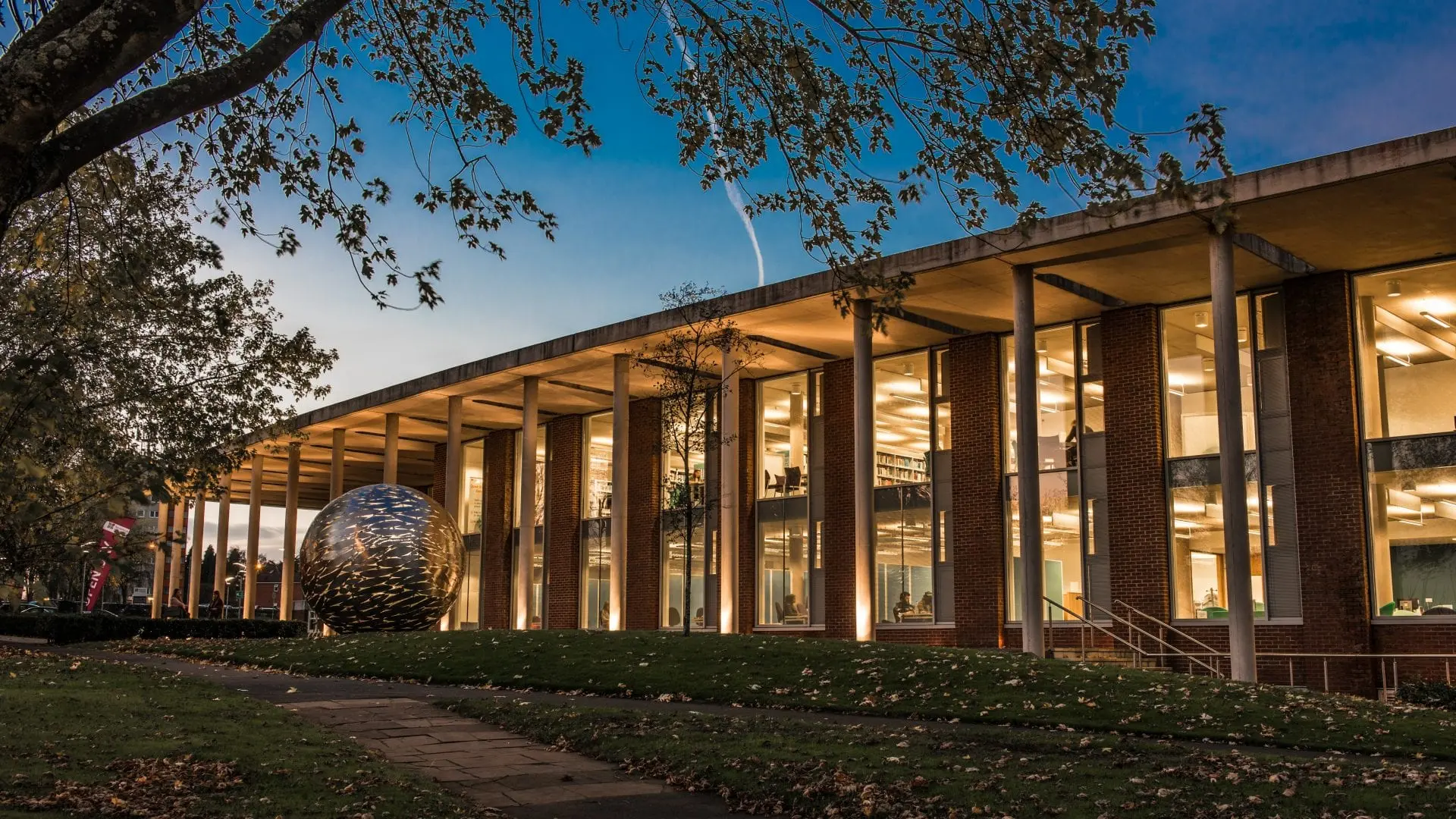
Got a question you’d like to ask?
What are the entry requirements
We welcome students from all backgrounds and accept a wide range of qualifications. If yours aren’t listed, don’t worry – our Admissions Team can help you explore your options. See full entry requirements.
Minimum 2:2 in any subject; A Level 3 or 4 certificate in counselling skills or equivalent; previous voluntary or paid experience in a helping or supporting role.
Applicants will normally be invited to a selection day for a group task and individual interview.
If you are in receipt of overseas qualifications and have no evidence of UK study you may be required to demonstrate your English proficiency through a Secure English Language Test (SELT) such as IELTS.
The Admissions team will provide further details within your offer.
Consideration will be given to applicants with lower grade in qualifications (e.g. a 3rd class degree or non-honours degree) who have a relevant range of post study professional experience. Professional experience will be considered by the programme leader in conjunction with the quality office on an individual basis.
Non-Academic Requirements:
DBS Clearance. Candidates must receive a satisfactory Disclosure and Barring System check prior to commencing the course.
Please contact Admissions if you have any questions.
Course fees & funding
Fees
All fees are shown in GBP (£).
The tuition fee for the 2026/27 academic year is: £5,120.
Fees for the 2027/28 academic year can be found on our Student Finance pages and choosing your degree type.
Please note: If this course includes a Foundation Year, the fees shown above apply to the Foundation Year only. Fees for subsequent years will be charged at the standard undergraduate full-time fee.
Funding
Find out what funding and support might be available to you through Student Finance and Student Success.
Additional costs
The University will review tuition fees and increase fees in line with any inflationary uplift as determined by the UK Government, if permitted by law or government policy, in subsequent years of your course. It is anticipated that such increases would be linked to RPI (the Retail Price Index excluding mortgage interest payments).
Find out about extra costs, timetable details, and how course modules may change through additional course information.
Check out our blog/news/events
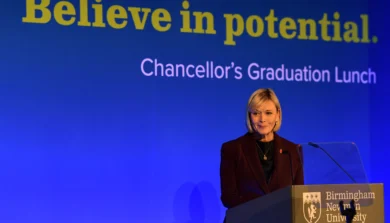
Birmingham Newman University Chancellor flies the flag for friendliness in front of region’s leading lights
Excellence does not need to come at the expense of friendliness, according to Julie Etchingham’s…
Trio of influential educational leaders recognised with honorary degrees from Birmingham Newman University
“Inclusion is a responsibility and a moral imperative,” was the call-to-arms from education leader Dr…
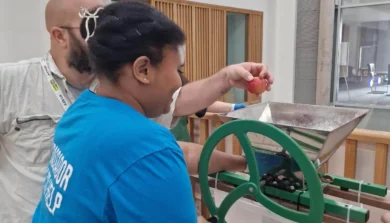
From orchard to glass: Birmingham Newman makes its own apple juice
Staff and students turned apples grown in Birmingham Newman’s campus orchard into fresh apple juice…

Superb Teaching Earns Second Successive The Times And Sunday Times University Of The Year Award for Birmingham Newman
Birmingham Newman University is the 2027 The Times and Sunday Times University of the Year…
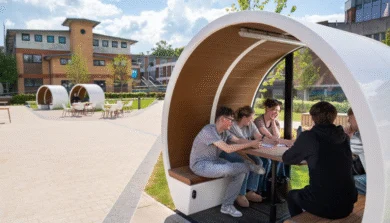
Birmingham Newman Soars to 35th Place as Fastest Rising University in The Guardian University Guide 2027
Birmingham Newman University is the fastest riser in this year’s Guardian University Guide, with a…
Book an open day
Find out about our next open day. Book now to secure your place.
This professional qualification prepares you for a career in counselling or psychotherapy. Graduates go on to work in settings such as the NHS and third-sector organisations, with many also establishing their own private practices.
UPCA/UKCP accredited
Courses we think you'll also like

Integrative Counselling MSc
- Start date:
- September 2027
- Study Mode:
- Full-time
- Length:
- 1 years

Psychology and Counselling Studies (with Foundation Year) BSc (Hons)
- Start date:
- Various
- UCAS Code:
- C803
- Study Mode:
- Full-time
- Length:
- 4 years

Psychology and Counselling Studies BSc (Hons)
- Start date:
- September 2027
- UCAS Code:
- 8C57
- Study Mode:
- Full-time
- Length:
- 3 years
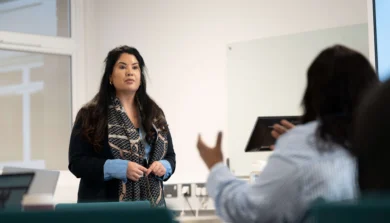
Introductory Certificate in Counselling
- Start date:
- January 2027
- Study Mode:
- Part-time