
Computing BSc (Hons)
Undergraduate
- Start date
- –
- Study mode
- –
- Course length
- –
- UCAS Code
- –
Interested in a different start date?
Course overview
Our Computing BSc is designed to prepare you for a future where technology and business work hand in hand. This course equips you with applied knowledge of digital technologies, cloud computing and AI, alongside the skills to manage IT projects and drive digital transformation in real-world contexts.
You’ll learn through a flexible and inclusive curriculum that blends technical expertise with professional communication and consultancy skills. With opportunities for work-related learning, placements and live projects, you’ll graduate ready to meet the demands of a fast-changing digital economy.
Book a free consultation
Want to find out more about your options? Book a free consultation with an Academic
What does this course cover?
Our BSc (Hons) Computing offers a curriculum designed to blend technical expertise with practical, real-world application. Students develop strong digital skills alongside essential business knowledge, preparing them for success in today’s fast-changing digital economy.
You’ll explore technical modules such as web development, cloud computing, cyber security, and machine learning, as well as emerging areas like smart technologies, IoT, and business analytics. At the same time, you’ll engage with business-focused subjects including organisational management, entrepreneurship, and sustainable consulting—building leadership, strategic thinking, and project management capabilities.
Learning is hands-on and industry-focused, with no formal exams. Instead, you’ll work on live projects, presentations, and practical outputs, including an industry project and a final-year capstone. This approach ensures you graduate with both the technical and professional skills needed to thrive in roles such as software engineering, digital consultancy, business technology, and digital transformation.
Why study this course
Computing is at the heart of innovation—and organisations need graduates who can combine technical knowledge with business insight. This course gives you the tools to succeed in a wide range of roles, from IT consultancy to project management and digital entrepreneurship.
Assessment
Assessment methods are carefully selected to mirror the types of tasks graduates will encounter in the workplace, including:
- Live client projects and case studies
- Practical demonstrations and technical portfolios
- Group-based problem-solving and agile development tasks
- Presentations and pitches to simulated or real stakeholders
- Digital artefact creation (e.g., websites, apps, dashboards)
What are the entry requirements
We welcome students from all backgrounds and accept a wide range of qualifications. If yours aren’t listed, don’t worry – our Admissions Team can help you explore your options. See full entry requirements.
• A-Level: Grade profile of CCC or 96 UCAS Tariff Points.
• BTEC: Grade profile of MMM. This can be achieved from either an Extended National Diploma or a combination of smaller BTEC qualifications.
• T-levels: A T-level with an overall Pass (A*-C) grade.
If you are in receipt of overseas qualifications and have no evidence of UK study you may be required to demonstrate your English proficiency through a Secure English Language Test (SELT) such as IELTS.
The Admissions team will provide further details within your offer.
Please contact Admissions if you have any questions.
Course fees & funding
Fees
All fees are shown in GBP (£).
The tuition fee for the 2026/27 academic year is: £9,790.
Fees for the 2027/28 academic year can be found on our Student Finance pages and choosing your degree type.
Please note: If this course includes a Foundation Year, the fees shown above apply to the Foundation Year only. Fees for subsequent years will be charged at the standard undergraduate full-time fee.
Funding
Find out what funding and support might be available to you through Student Finance and Student Success.
Additional costs
The University will review tuition fees and increase fees in line with any inflationary uplift as determined by the UK Government, if permitted by law or government policy, in subsequent years of your course. It is anticipated that such increases would be linked to RPI (the Retail Price Index excluding mortgage interest payments).
Find out about extra costs, timetable details, and how course modules may change through additional course information.
Course modules
Where will you study?
Computing
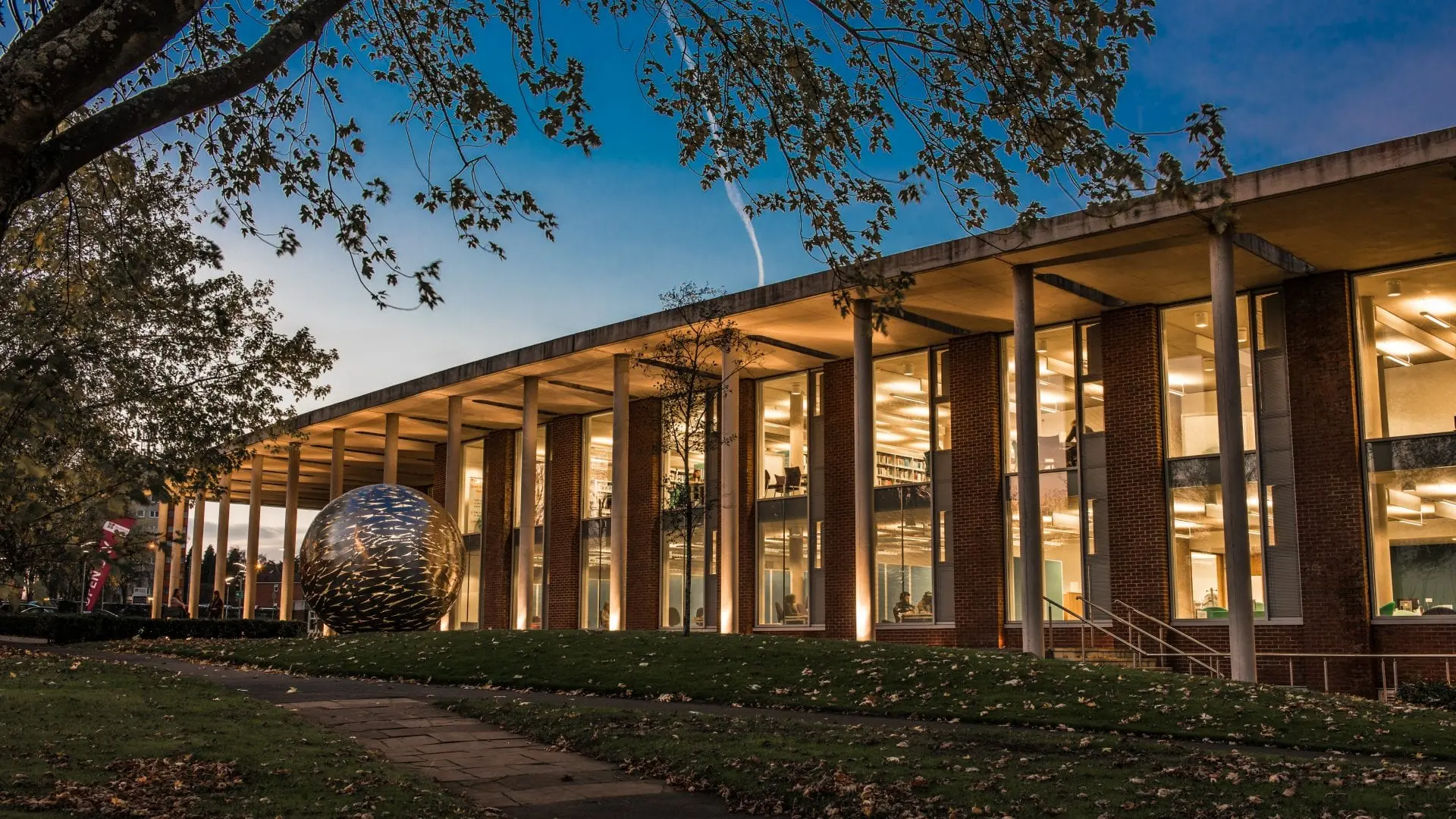
Our campus
Take a tour of our campus and view some of the facilities we have to offer.
Courses we think you'll also like

Computer Science with Bioinformatics BSc (Hons)
- Start date:
- Various
- Study Mode:
- Full-time
- Length:
- 3 years

Computer Science BSc (Hons)
- Start date:
- Various
- UCAS Code:
- G400
- Study Mode:
- Full-time
- Length:
- 3 years

Computer Science (with Foundation Year) Bsc (Hons)
- Start date:
- Various
- UCAS Code:
- G40X
- Study Mode:
- Full-time
- Length:
- 4 years

Computer Science with Cyber Security BSc (Hons)
- Start date:
- Various
- UCAS Code:
- G403
- Study Mode:
- Full-time
- Length:
- 3 years
Student life & support
Student life & support at Birmingham Newman brings together the services, facilities and guidance that help students feel supported and succeed at every stage of their journey.
From academic skills, wellbeing and disability support to student finance, cost‑of‑living help, accommodation and campus life, we support students both inside and outside the classroom – so they can make the most of their time at university and beyond.
Life in Birmingham
Birmingham is one of the UK’s largest and most diverse cities, offering a vibrant and welcoming environment for students. From world-class shopping and a thriving food scene to cultural attractions and green spaces, there’s always something to explore.
The city is also one of the most affordable places to study in the UK, helping you make the most of your student budget. With excellent transport links, you can easily travel across the UK, including quick connections to London and other major cities.
Whether you’re looking for nightlife, live events, or quiet places to relax, Birmingham has something for everyone.
Check out our blog/news/events

From orchard to glass: Birmingham Newman makes its own apple juice
Staff and students turned apples grown in Birmingham Newman’s campus orchard into fresh apple juice…

Superb Teaching Earns Second Successive The Times And Sunday Times University Of The Year Award for Birmingham Newman
Birmingham Newman University is the 2027 The Times and Sunday Times University of the Year…
Birmingham Newman Soars to 35th Place as Fastest Rising University in The Guardian University Guide 2027
Birmingham Newman University is the fastest riser in this year’s Guardian University Guide, with a…
Teaching Excellence Powers Birmingham Newman Rise in Daily Mail University Rankings
Birmingham Newman University is the UK’s Number 1 university for teaching excellence, student experience and…

University shortlisted for national social mobility award
Birmingham Newman has been shortlisted for University of the Year in the UK Social Mobility Awards…
Book an open day
Find out about our next open day. Book now to secure your place.