
Developmental Science with Neurodiversity MSc
Postgraduate
- Start date
- –
- Study mode
- –
- Course length
- –
- UCAS Code
- –
Interested in a different start date?
This course is subject to validation
The MSc Developmental Science & Neurodiversity will help you develop an advanced understanding of human development across the lifespan, with a particular focus on neurodiversity, mental health and individual differences. Drawing on contemporary research and real-world practice, you’ll explore how developmental, psychological and neuropsychological factors influence learning, wellbeing and life experiences.
Throughout the programme, you’ll develop the knowledge, research skills and confidence to critically evaluate evidence, understand diverse developmental pathways and apply psychological theory to real-world settings. Through specialist modules and a substantial independent dissertation, you’ll have the opportunity to explore an area of developmental science or neurodiversity that interests you most.
Supported by experienced academics in a welcoming learning environment, you’ll be encouraged to think critically, engage with current research and develop the skills needed for further study or a wide range of careers supporting individuals, families and communities.
This innovative MSc combines developmental science, mental health, neuropsychology, and neurodiversity to provide a contemporary understanding of human development and individual differences. You will learn from research-informed teaching and explore topics that are increasingly relevant across education, healthcare, workplace support, and community settings.
A distinctive feature of the programme is its dedicated focus on neurodiversity, including specialist modules on the foundations of neurodiversity and practical approaches to support, coaching, and inclusion. Alongside developing advanced research and analytical skills, you will gain knowledge that can be applied in a wide range of professional contexts.
Whether you are looking to enhance your current professional practice, pursue a specialist career, or progress to doctoral study, this course will equip you with the confidence, knowledge, and critical skills to make a meaningful contribution to supporting diverse individuals and communities.
Got a question you’d like to ask?
What are the entry requirements
We welcome students from all backgrounds and accept a wide range of qualifications. If yours aren’t listed, don’t worry – our Admissions Team can help you explore your options. See full entry requirements.
A second-class honours degree (2:2) or above in psychology, cognitive science, education, behavioural sciences or relevant discipline.
If English is not your first language, you must have an IELTS score of 6.5, with no element below 6.0. (Other English language qualifications are also accepted. Please contact admissions for further information).
Please contact Admissions if you have any questions.
Course fees & funding
Fees
All fees are shown in GBP (£).
The tuition fee for the 2026/27 academic year is: £10,250.
Fees for the 2027/28 academic year can be found on our Student Finance pages and choosing your degree type.
Please note: If this course includes a Foundation Year, the fees shown above apply to the Foundation Year only. Fees for subsequent years will be charged at the standard undergraduate full-time fee.
Funding
Find out what funding and support might be available to you through Student Finance and Student Success.
Additional costs
The University will review tuition fees and increase fees in line with any inflationary uplift as determined by the UK Government, if permitted by law or government policy, in subsequent years of your course. It is anticipated that such increases would be linked to RPI (the Retail Price Index excluding mortgage interest payments).
Find out about extra costs, timetable details, and how course modules may change through additional course information.
Check out our blog/news/events
From orchard to glass: Birmingham Newman makes its own apple juice
Staff and students turned apples grown in Birmingham Newman’s campus orchard into fresh apple juice…

Superb Teaching Earns Second Successive The Times And Sunday Times University Of The Year Award for Birmingham Newman
Birmingham Newman University is the 2027 The Times and Sunday Times University of the Year…
Birmingham Newman Soars to 35th Place as Fastest Rising University in The Guardian University Guide 2027
Birmingham Newman University is the fastest riser in this year’s Guardian University Guide, with a…
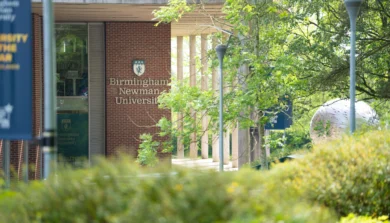
Teaching Excellence Powers Birmingham Newman Rise in Daily Mail University Rankings
Birmingham Newman University is the UK’s Number 1 university for teaching excellence, student experience and…

University shortlisted for national social mobility award
Birmingham Newman has been shortlisted for University of the Year in the UK Social Mobility Awards…
Book an open day
Find out about our next open day. Book now to secure your place.
Graduates of the MSc Developmental Science & Neurodiversity will develop advanced knowledge and research skills that are valued across education, health, social care, community support, and third-sector organisations.
The programme may support progression into roles such as:
• Neurodiversity Support Practitioner
• Learning Support Specialist
• Inclusion and Accessibility Advisor
• Learning and Development Officer
• Wellbeing or Student Support Practitioner
• Family and Community Support Worker
• Research Assistant
• Specialist Mentor or Coach
The MSc also provides a strong foundation for further professional training and postgraduate study. Graduates wishing to enter regulated professional psychology roles will typically need to complete additional accredited training and professional qualifications.
Courses we think you'll also like

Advanced Computer Science MSc
- Start date:
- Various
- Study Mode:
- Full-time
- Length:
- 1 years

Data Science (conversion) MSc
- Start date:
- Various
- Study Mode:
- Full-time
- Length:
- 1 years

Computer Science (Conversion) MSc
- Start date:
- Various
- Study Mode:
- Part-time
- Length:
- 2 years
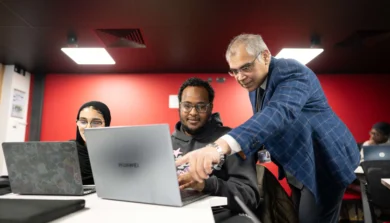
Computer Science (conversion) MSc
- Start date:
- Various
- Study Mode:
- Full-time
- Length:
- 1 years