Student welcome in the quad

Key dates

Teaching starts

Induction day

More Induction & Timetable information below

Programme Lead

Induction

Pre-induction

In preparation for your Masters study please ready yourself by:

  • Engaging with and thinking about contemporary educational issues and concerns in the press (UK and global), and how they are reported in educational publications, and across media.
  • Reading widely around the interests you have in education, using Open Access research articles.

A Masters course is a progression from undergraduate study and requires a higher level of independent study, persistent curiosity, criticality, reflection and layered analysis and synthesis. Books such as Elliott, G., Kadi-Hanifi, K. and Solvason, C. (2018) Your guide to successful postgraduate study. SAGE (chapter 4 especially) might be useful.

In preparation for Semester one modules please start reading about Educational Research and Inclusive practices in Education. The following texts are ones we recommend on the modules and good starters:

EPM730 Research Design: Methodology and Methods

  • Cohen, L., Manion, L. and Morrison, K. (2018) Research methods in education. Eighth edition. Routledge.
  • Creswell, J.W. and Creswell, J.D. (2023) Research design: qualitative, quantitative, and mixed methods approaches. Sixth edition. SAGE
  • Creswell, J.W. and Guetterman, T.C. (2021) Educational research : planning, conducting, and evaluating quantitative and qualitative research. Sixth edition, global edition. Pearson Education
  • Denzin, N.K. et al. (eds.) (2024) The SAGE handbook of qualitative research. Sixth edition. SAGE.
  • Pring, R. (2015) Philosophy of educational research. Third edition. Bloomsbury Academic.

EPM722 Inclusive Practices

  • The Equality Act (2010) Available at: https://www.legislation.gov.uk/ukpga/2010/15/
  • UNESCO (1994) The Salamanca Statement and Framework for Action on Special Needs Education Available at: https://unesdoc.unesco.org/ark:/48223/pf0000098427
  • Accioly, I., and Macedo, D.P. (2021) Education, Equality and Justice in the New Normal. Bloomsbury Publishing.
  • Crossley, N and Hewitt, D (2021) Inclusion: A principled guide for school leaders London: Routledge
  • Graham, L.J. (ed.) (2024) Inclusive education for the 21st century: theory, policy and practice. Second edition. Routledge
Induction day

Tuesday 15 September

  • 09:00 – 11:30
  • Room HI101

Your first day on campus is induction day. The programme for the day will enable you to:

  • Meet and get to know your fellow students and staff
  • Ensure you are registered so that you can access resources
  • Learn how to access Library and Moodle
  • Familiarise you with the university if you are new to it
  • Find out more about how the elements of the MA Education on-campus course relate
  • Reflect on your pre-registration reading and thinking
  • Ensure you have accessed resources for Week 1 pre-session tasks
  • Begin to understand expectations of Masters study and the year ahead.

You will receive an email with a timetable for the day early in September.

IMPORTANT: Please bring your photo ID with you on this date to complete enrolment.

Timetable

Timetable

First block teaching starts week beginning 21st September 2026:

  • Tuesdays: TBC
  • Wednesdays: TBC
  • Sharing research seminars on Thursday 15th October and 19th November 4.30 – 7pm

Full details of your individual academic timetable will be available via your university email calendar after you have completed online enrolment and set up your student login.

Module delivery

Teaching is enquiry-based and collaborative. Your interests will be central to the assignment foci you choose. Modules will provide opportunity for you to identify and generate connections between theory and practice in relation to your interests. You will be facilitated to learn from and with peers, to investigate and explore both together and independently.

  • You will study five modules in total (4 x 30 credit / 300 hours study; 1 x 60 credit / 600 hours study):
  • Your first four (taught) modules will be supported with a number of academic toolkit sessions.

Additional Masters research sharing sessions will enrich your studies and provide further guidance for your own research project. These will take place at twilight times each term, concluding with our annual conference in July.

September – December

EPM722 Inclusive Practices will enable you to critically engage with the concept of inclusion with a focus on special educational needs and disability. You will develop a critical understanding of how structural and socio-culturally situated inequalities can affect young people’s access, participation and success in education and society and how different needs, such as SEND can affect pupils’ participation and learning. You will explore strategies to promote inclusive and supportive communities through evidence-based practices.

EPM730 Research Design: Methods and Methodology will enable you to develop a critical understanding of the principles underpinning an effective research design in education at master’s level. You will explore issues of research methodology, ethics and understanding in relation to your chosen field, to enhance and inform professional and/or academic practice. You will design a research project, which will include a framework for the collection and analysis/interpretation of primary data.

January – April

EPM725 Critiquing Education will explore how the lenses of philosophy, psychology and sociology of education can illuminate and deepen our own criticality in examining contemporary and critical issues of concern in education. You will consider how they can generate distinct and complementary lenses for thinking critically about contemporary, historical and global issues of collective and personal interest, deepening your skills in critical analysis.

EPM721 Pedagogy and Practice will engage you in a critical exploration of how learning happens and an investigation of the character and claims for diverse educational practices and pedagogies. Through a focus on the interrelated areas of learning, teaching and assessment you will engage with key theories and debates, analysing and reflecting on their relevance to your personal and professional interests.

May – August

EPM705 Research Project / Dissertation (double weighted) will involve some taught dissertation sessions, workshops and supervisions to support you to undertake and write-up your own research study.

Teaching team

You will have different module tutors across the year but will be working immediately in your first semester with:

  • Dr Jo Trowsdale – EPM730 Research Design: Methodology and Methods
  • Dr Miranda Barker – EPM722 Inclusive Practices

You will have opportunity to engage with and learn staff from the wider Education and Childhood and Professional Studies team and across the School of Education. This might be through our Sharing Research sessions, workshops, as guest speakers in core modules, or as dissertation supervisor.

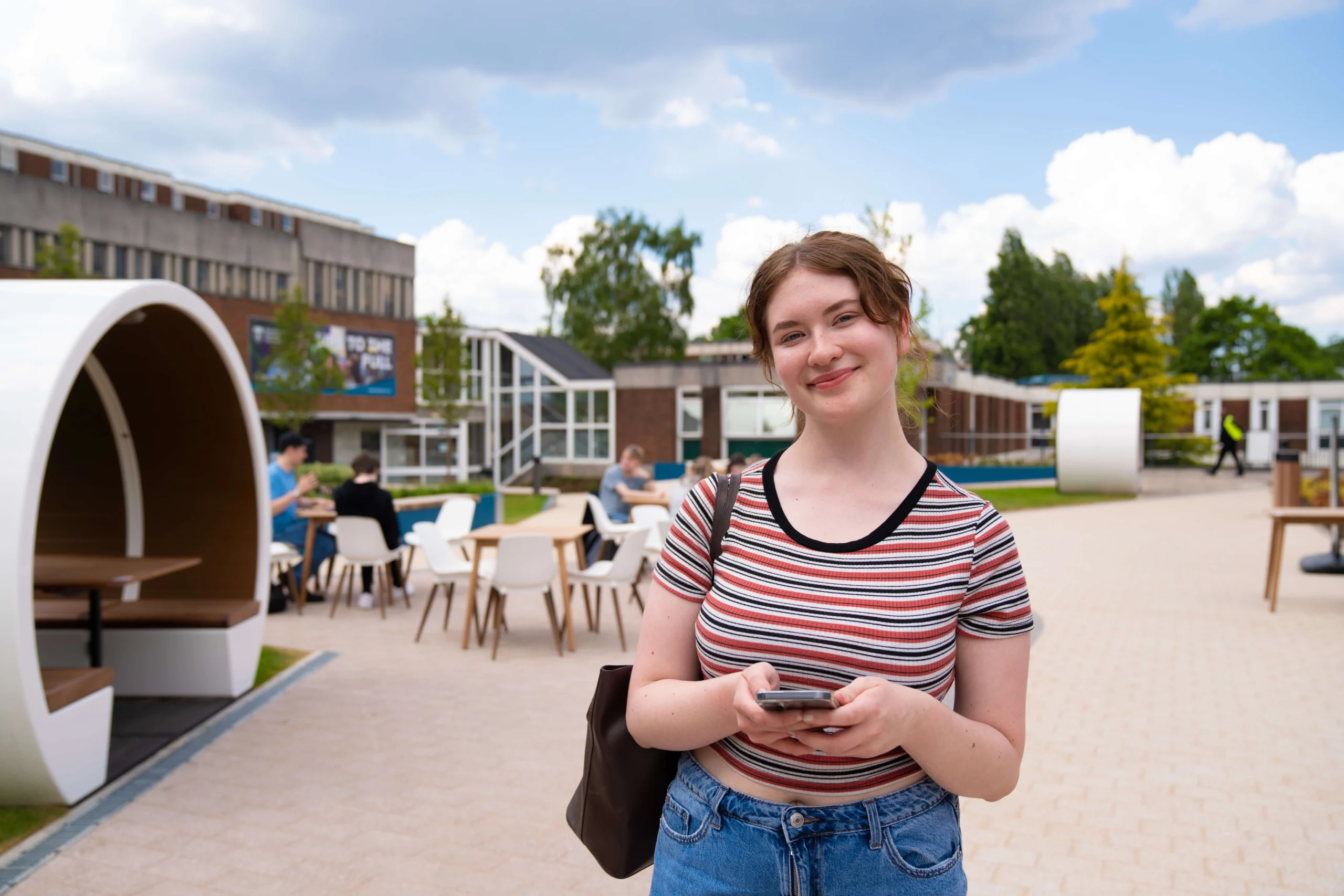
Student welcome in the quad
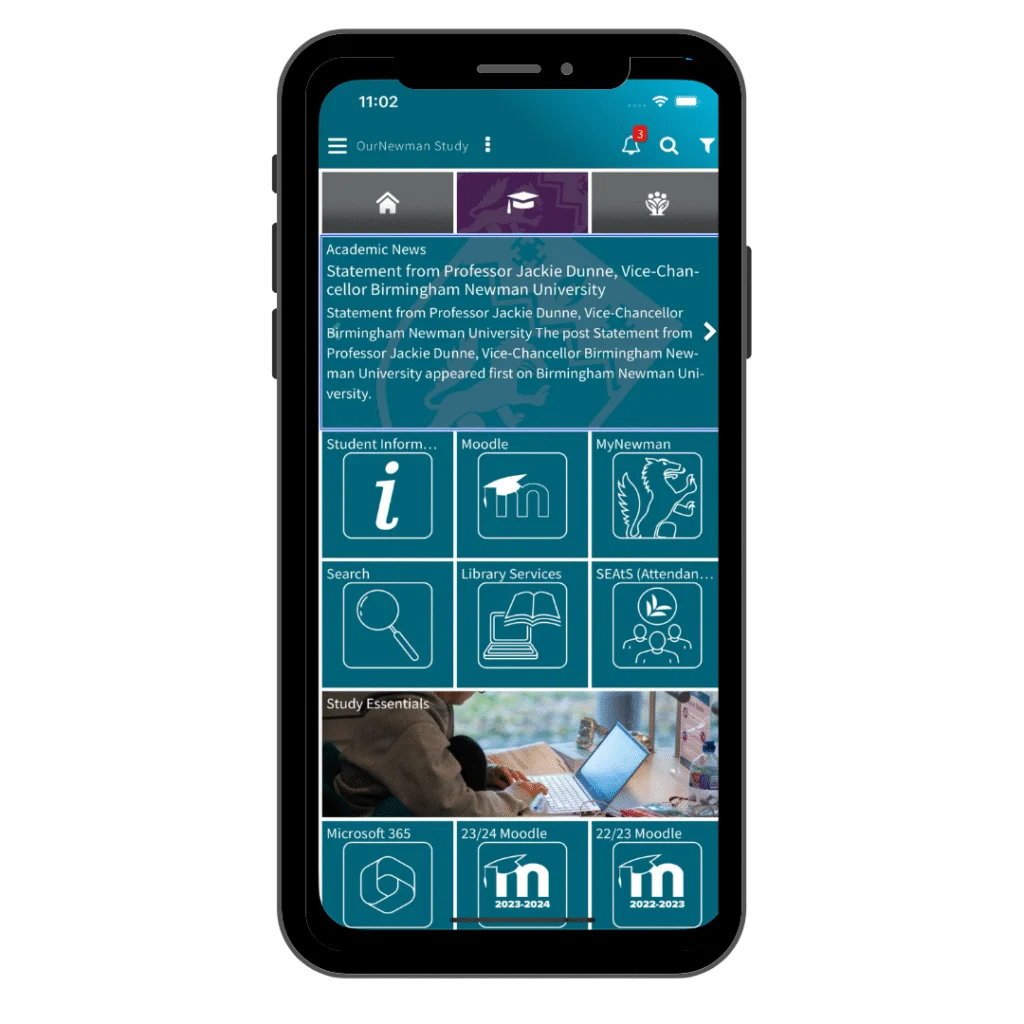
OurNewman App - student view

Disability & Inclusion overview

Privacy Notice

By clicking play, you agree to load content from YouTube, which may collect data about your visit. YouTube’s privacy policy applies.

Disabled Student Allowance

Privacy Notice

By clicking play, you agree to load content from YouTube, which may collect data about your visit. YouTube’s privacy policy applies.

Advice & Wellbeing support

Privacy Notice

By clicking play, you agree to load content from YouTube, which may collect data about your visit. YouTube’s privacy policy applies.

Mental Health Support

Privacy Notice

By clicking play, you agree to load content from YouTube, which may collect data about your visit. YouTube’s privacy policy applies.

Student Money Advice

Privacy Notice

By clicking play, you agree to load content from YouTube, which may collect data about your visit. YouTube’s privacy policy applies.

HeadStart

HeadStart schedule

Monday 7 September
On campus sessionsOnline sessions
Monday 7 September (10am to 11am)
– eLearning – Digital for your Studies
– On campus – ST002
Monday 7 September (11am – to 12pm)
– Student Engagement – How to manage your first four weeks
– On campus – ST002
Monday 7 September (1pm to 2pm)
– Learning Development – Study and Writing at University level
– On campus – HI104
Tuesday 8 September
On campus sessionsOnline sessions
Tuesday 8 September (10am to 11am)
– Digital and Your Studies (Online)
Tuesday 8 September (11am to 12pm)
– I’ve never used a library before!: What to expect in Newman Library (Online)
Wednesday 9 September
On campus sessionsOnline sessions
Wednesday 9 September (11am)
– Library – “I’ve never used a library before!”: What to expect in Newman Library
– On campus – ST002
Wednesday 9 September (12pm)
– Careers – Unlock your Future: Strengths, Options and Careers Service Intro
– On campus – ST002
Wednesday 9 September (2pm)
– Meet the Students’ Union: Your Guide to Student Life – Life Beyond the Lecture Theatre
– On campus – HI104
Thursday 10 September
On campus sessionsOnline sessions
Thursday 10 September (10am to 11am)
– AI and your learning: getting the basics right (Online)
Thursday 10 September (12pm to 1pm)
– Unlock your Future: Strengths, Options and Careers Service Intro (Online)
Thursday 10 September (1pm to 2pm)
– Learning Development: Study and Writing at University level (Online)
Thursday 10 September (2pm to 3pm)
– Sources for courses: a guide to reading expectations at University (Online)
Friday 11 September
On campus sessionsOnline sessions
Friday 11 September (10am to 11am)
– Money and Student Life (Online)
Friday 11 September (11am to 12pm)
– Managing your wellbeing (Online)
Friday 11 September (1pm)
– Student Money Advisor
– Money and Student Life
– On campus – ST002
Friday 11 September (2pm)
– Advice & Wellbeing
– Managing your wellbeing
– On campus – ST002
Friday 11 September (3pm)
– Library
– Sources for courses: a guide to reading expectations at University
– On campus – ST002

What to expect

Attendance monitoring

At Birmingham Newman University we use SEAtS Software to monitor attendance and engagement in order to support students to achieve success.

For further detailed help on using SEAtS see our SEAtS Guidance on our University Self Service Portal (student login required).

Instagram does not support direct link sharing, below is the page URL to copy to add to Instagram posts manually: